
The Nostalgia of Haruhi Suzumiya
03.11.26 // 3:54pm
I recently rewatched The Melancholy of Haruhi Suzumiya for the first time in over fifteen years. I watched it with Beary in our quest to expose each other to “franchises we were obsessed with when we were 12” (he’s trying to get me to watch Eureka 7 with him, but it’s hard to get through episodes when all we really wanna do is yap).
Revisiting the show unlocked some deep-rooted, forgotten memories in me. It made me feel alarmingly complicated—more so than I ever could’ve anticipated. This franchise once meant so, so much to me, and realizing that I had lost so much of my knowledge of it over the years was a little… devastating. I know that younger version of Cereus would’ve been so disappointed in me. I remember her vehemently defending her interests, denying that Haruhi was just a phase and that she’d someday grow out of it… and look at me now! Grown out of it.

I own every novel up until Surprise.
It happens to every kid and teenager. I’m not unique. It hits a little hard for me, though, being one of those children who was considered “mature for their age” (read: undiagnosed autistic) and generally into franchises that were considered aimed for people older than me. I got into Haruhi in middle school, for example, but it was a show aimed at high schoolers. I remember being so excited when I turned the same age as Haruhi, then Mikuru… and then, eventually, I passed all of the named characters in age. I’m probably older than adult Mikuru now—though her age is, of course, classified information. It’s an odd feeling to have something you were once too young for turn into something you’re too old for—slowly but surely, but also in the blink of an eye.
When I graduated high school, I got it into my head that I was, indeed, too old for Haruhi—and too old for anime in general. I was big into Tumblr at the time, and there was lots of (and still is) so much discourse about anime’s strange relationship with teenagehood. Teenagers are aggressively sexualized in nearly every anime under the sun, and Haruhi is no exception. Haruhi kind of introduced me to sexuality—seeing Haruhi in a bunny girl outfit and Mikuru in a maid dress made me say to myself, “Oh, I guess I like girls.” Being exposed to Itsukyon yaoi via tentacle hentai doujin uploaded to YouTube (PINK! By Zerohaku… holy shit, I found it) helped gently introduce empathetic masculinity that eventually led to my coming out as genderfluid.
The common argument is that the sexualization of these teenage characters is, y’know, bad. These doujin, featuring teenage characters, were published by, bought by, and then presumably translated by adults—and then were consumed by children. Me. I was a child, and I found this doujin on YouTube—a platform that’s not supposed to have explicit pornographic content, and… it did kind of wind up making me hypersexual. Hypersexual in a nerdy, not-actually-seeking-sex-and-just-reading-a-lot-of-hentai kinda way… but still, I’m not sure if a 12 year old should be consuming so much explicit content. I think that I turned out fine, and I wouldn’t necessarily change what happened considering that I like the person I turned out to be. But god, I wouldn’t allow my child unfettered access to the internet, given what I’ve been through.
Haruhi was also used as a tool to groom me. When I was 15, a 22 year-old-man reached out to me on Tumblr through our shared enjoyment of Haruhi, where he proceeded to lure me into Kik chatrooms and livestream himself with his pants down. I was luckily taught to never give out personal information on the internet, so I never sent pictures of myself or gave him any more access to me… but I was still naive enough to allow this to happen without realizing what sort of scars it would leave on me. I was mature for my age, after all. I could be sexual. Haruhi was sexual, and she was my age. So it was fine for me to flirt with an adult man, wasn’t it? So I thought—and the second after it happened, I felt sick to my stomach. It still makes me feel sick.
So, when I turned 18, I fundamentally agreed with the sentiment that these types of shows shouldn’t exist. Haruhi was evil: it sexualized young characters and allowed predators to have access to teenagers. So, I tucked away all of my figurines and artbooks and forced myself to like more mature content instead—mature at the time being the MCU, which, woof. Yikes.
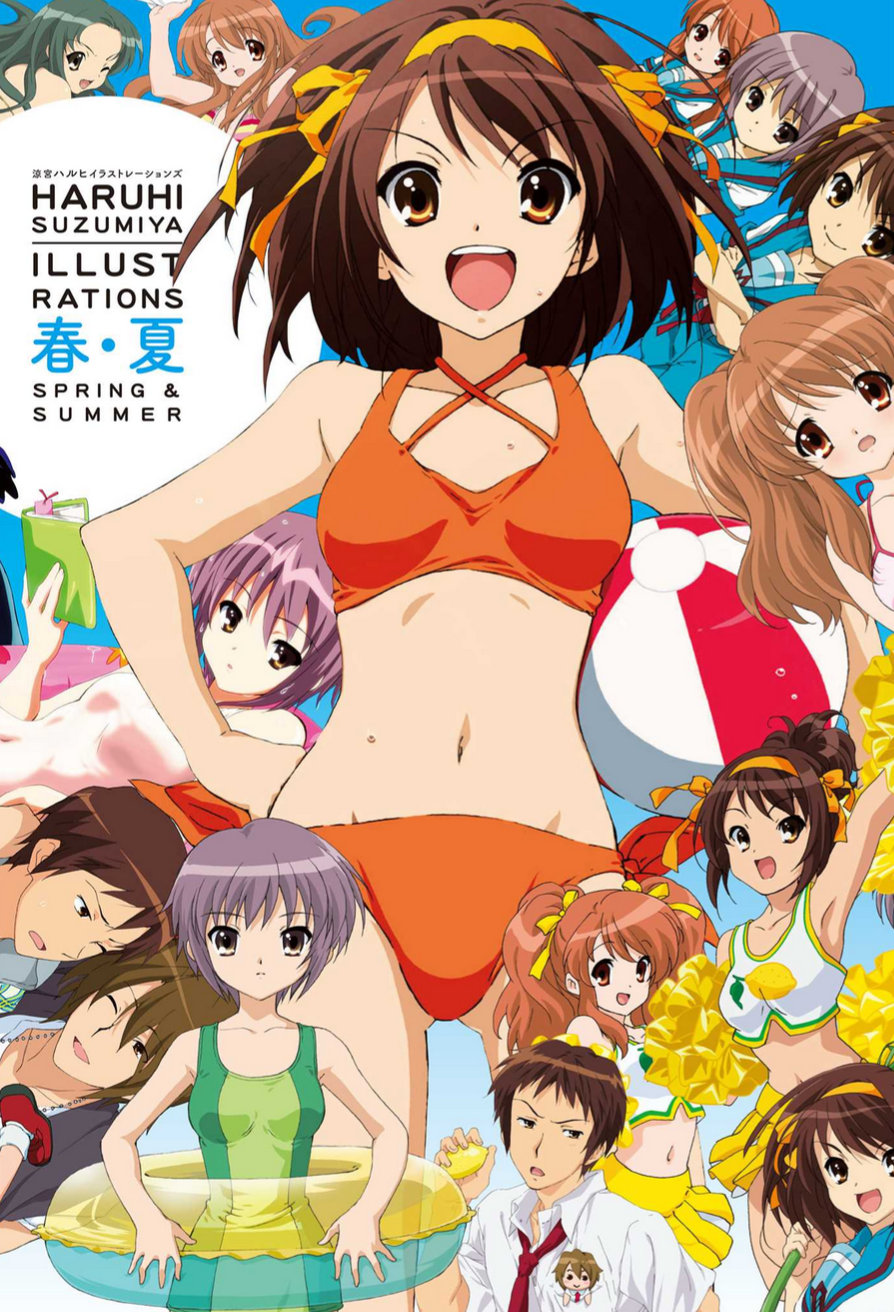
I bought this particular artbook at one of my very first anime conventions for around 40 dollars.
This broke something in me I’m still working on repairing. I regret this part of my life immensely. I went on to pursue a Japanese major in college because I had loved it so much in high school, but my passion for it had been snuffed out. So much anime—the very thing that inspired me to learn Japanese—was problematic… and I felt like I had no desire to study it anymore. I did poorly in my classes. I felt miserable, because all of a sudden, I wasn’t passionate about anything, because I had forced myself to kill my love.
I cannot express just how deeply I loved Haruhi. It consumed my life. I wrote fanfiction, I watched MADs on Nico Nico Douga, I read doujin, I learned the dance, I watched the Endless Eight as it was airing and the Disappearance through theater camrip, I downloaded fanmade fighting games and pirated Japan-exclusive visual novels and listened to all of the character songs on my iPod Nano. At some point, a post I made on Tumblr went semi-viral that displayed all of my Haruhi merch—figurines, artbooks, manga, light novels, etc.—in a pentagram formation with the caption, “SUMMON THY THIRD SEASON,” or something to that effect. I do wish I could find the photo/post, but it’s been lost to the ages. I remember first learning how to read Japanese and being so excited that I could suddenly read bits and pieces of the Haruhi logo.
And then, one day, I forced myself to hate it. Why, then, was I bothering to pursue this degree?
I first learned about Haruhi from a forum thread on Court Records that was dedicated to documenting references to Ace Attorney in other media. In the arc Remote Island Syndrome, Haruhi puts all of the clues of a “murder mystery” together while mimicking famous Phoenix Wright animations. Did that mean Phoenix Wright was complicit in evil, too? Ace Attorney has its own myriad of problematic content: Dr. Hotti sexualizing a 9-year-old child, the shit that happens to Maya when she channels Mia, Trucy’s magic panties, 13-year-old girls becoming prosecutors… the list goes on. Why was I bothering to learn computer science, too, if the video games and technology that inspired me to pursue that were so problematic?
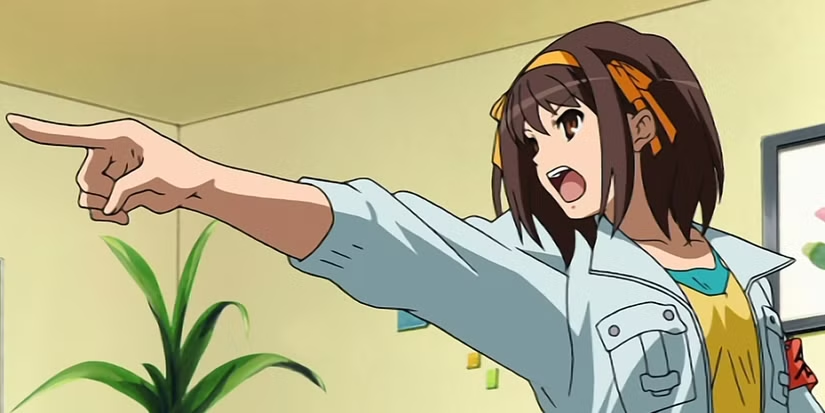
Objection!
Nowadays, I have a more nuanced opinion on this matter. I now know true evil. Technological corporations—run by Zuckerberg, Musk, Bezos—are evil. They killed my passion for technology in a way only true evil can… and in comparison, the things I believed were evil when I was 18 don’t seem quite as bad. I recognize the damage that Haruhi did to me and children like me—but, in the same breath, I’m grateful for its existence. It inspired me to create, to love. It helped me recognize facets about myself that I’m not sure I ever would’ve without it. If I had never been exposed to the sexuality it presented, I probably wouldn’t have ever discovered I identified as LGBT+, and I wouldn’t be dating my lovely boyfriend. I wouldn’t give that up.
I also struggle to feel guilty about enjoying “problematic” content these days. Rewatching Haruhi, I can recognize that it’s no longer for me—but I still liked it. The way the show is stylized and the characters are written reminds me so much of what it was like to be at that chuunibyou age, of thinking you’re the center of the universe. That’s kind of what the premise of the show boils down to: even though every teenager thinks the world revolves around them, it actually revolves around Haruhi—what would be the ramifications if a teenage girl’s problems actually were the most important thing in the universe? She’d have summer never end, of course. She’d rewrite reality to be with her crush. It’s cute. It’s nostalgic.
I don’t think there’s anything wrong with consuming and enjoying this kind of media. It’s okay to be nostalgic for an era you’ve since grown out of. Similarly, even though Haruhi is sexualized, I still think it’s… okay. Teenagers are sexual. I was sexual. The sexuality in Haruhi reminds me of what it was like to experiment with myself at that age—squishing my friends’ boobs, dressing in maid outfits because I thought that was what “sexy” was supposed to be. It elicits deep, dusty feelings of nostalgia, and I think it’s fine for it to exist.
I think that predators are going to find their chosen prey in any way they can. Using something like Haruhi may be easier for them, as teenagers exposed to an inherently sexual show are already at least familiar with sexuality as a concept—but you hear about predators grooming minors through Roblox and Minecraft, too. Evil people are going to be evil no matter what shows they watch. Mass murderers have killed in the name of My Little Pony and Danny Phantom—this doesn’t mean that My Little Pony promotes murder. I don’t think you can make the argument that the anime someone watches—even if it’s a show about a teenage girl in a bunny girl outfit—makes them more likely to commit sexual crimes if you don’t also think that someone playing a violent video game is going to make them violent. It’s all just fiction.
This is what I meant when I said rewatching Haruhi made me feel complicated. On one hand, I felt a swell of joy remembering why, exactly, I loved this show and its characters so much. I loved how confident and bombastic Haruhi was as a character—I wanted to parade myself with her same level of assuredness. “I love what I love,” says Haruhi, “and I don’t care what you think. If you’re not an alien, time traveler, or esper, I don’t want anything to do with you.” I think the inherent, almost Shakespearean drama of her being so close to the type of people she loves but never truly meeting them is so tragic.
On the other hand, watching the show as an adult, I could recognize the inherent flaws that I was blind to as a kid. I suppose I recognized those flaws then, but they compelled me more than deterred me—I’ve always found myself drawn to flawed media more so than the “greats” because I feel a desire to “fix” things with fanfiction and the like. Haruhi is a distinctly lonely show: despite pitching a story about a group of weirdos going on adventures, nobody in the SOS Brigade feels like they enjoy one another’s company. Mikuru, Yuki, and Itsuki are all placating the whims of Haruhi. Especially in the second season, Haruhi acts cruel and vindictive, and nobody really says anything about it—except for Kyon.
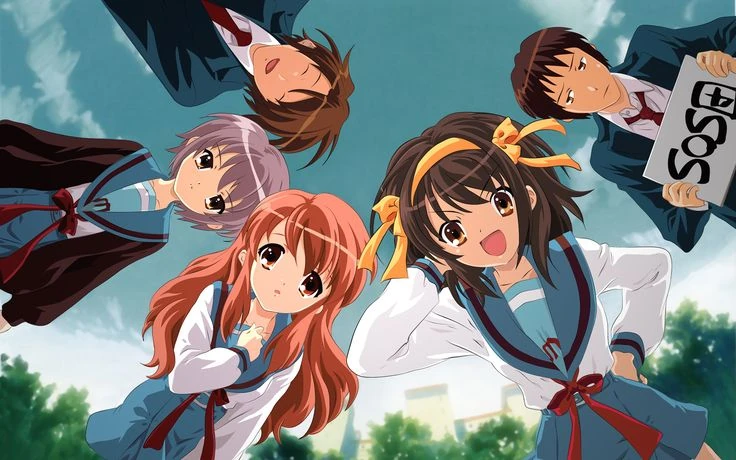
But they look like such a cute group of friends. It’s really kinda sad.
Haruhi regularly abuses Mikuru, and it’s played for laughs. Haruhi ignores Yuki—and also tortures her for 500 years (even though it wasn’t really her fault). As a kid, I was always the most compelled by Itsuki: Itsuki, unlike the other two members of the SOS Brigade, actually cares for Haruhi. He’s all but confirmed to be in love with her in Disappearance, and his constant pacifying makes more sense when you consider not only the beliefs of his Agency, but his own feelings. But, even though Itsuki likes Haruhi… he doesn’t really like Kyon, does he? They’re not really friends. Itsuki kind of loathes Kyon, really: he’s jealous of him, he regularly needles and teases him.
When I was young, I was SUPER into the pairing of Itsuki and Kyon, called Itsukyon. I regularly visited the Itsukyon livejournal to find people uploading fanfiction and doujin scans. I also shipped Haruhi/Itsuki, as well as the three of them in an OT3. Itsuki Koizumi shaped my taste in fictional guys for the next, like, ten years: I always found myself going after boys hiding mysterious secrets beyond bright smiles (see Kaworu, Lemres, Ryou Bakura). This was the first “yaoi” pairing I was into—despite being into Ace Attorney before Haruhi, I refused to ship Narumitsu and Klapollo until way later in life and instead preferred Phoenix/Maya (whose age gap is disgusting to me now, but as a 10-year-old, 16 and 24 might as well have been the same) and Klavier/Ema (a pairing I still like to this day, though I prefer Klapollo or the OT3). I own pretty much every Itsuki figurine ever released, and I even own the officially licensed doujin collection that commissioned famous Itsukyon artists (many of whom I recognized) for little pseudo-shippy chapters.
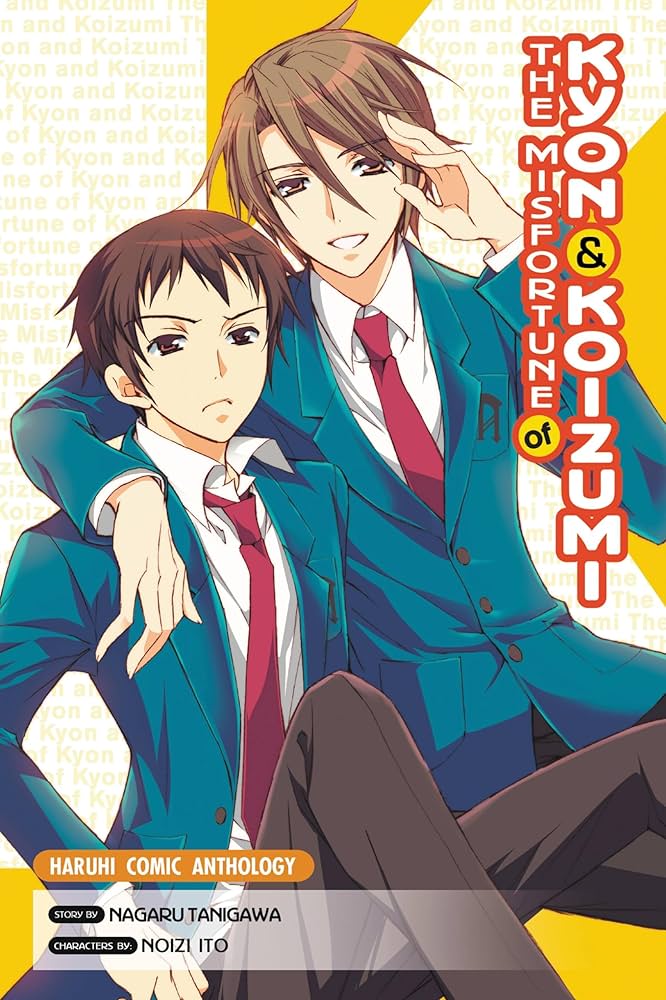
Watari was one of my favorite doujin artists, and having their work in print was so, so cool.
I remember how much these characters meant to me. I glimpsed memories of fanfiction I once read—of Itsuki and Kyon continuing their relationship into college, of them confessing their feelings during a camping trip, of being stuck together in some scary Saw-trapped filled house… and more. But, while watching the show, I couldn’t manage to kindle that same spark I once felt for them. I’m not really “into” any media franchises at the moment: I’m passively into FFXIV, but the story hasn’t captured me since 6.0. I’m into D&D and my own OCs, but those don’t really count. I’m “into” the old web and fashion, but that’s not something I can write fanfiction about.
Subconsciously, I think I was hoping for this rewatch of Haruhi to awaken that same creative drive I had as a child. I was hoping to fall in love with it again so wantonly, so deeply and unabashedly, that I would feel… I don’t know, whole? I can’t shake the feeling that I’m missing something in my life right now, not being super “into” something. I’ve always been “into” fandom. Who am I without it? If I can’t get into anything new, maybe I have to find solace in the things that once brought me so much joy. If little me liked Haruhi, why can’t the me of the now?
Of course, this didn’t wind up happening. I liked my rewatch, and I was pleasantly surprised by how well the show had aged. It feels very much like watching The Matrix from a modern perspective: because so much has been derived from it, it feels derivative, but also necessary. Haruhi paved the way for modern anime to be what it is. That said, I don’t really like modern anime—it’s been gentrified by corporate overlords into gooey moe slop—but Haruhi felt refreshingly real. Published in 2003 and then animated in 2006, the nerdy counter-cultural references Kyon and Haruhi mention feel genuine rather than bait. It feels like a real otaku/nerd wrote it, not a corporate executive. Even Lucky Star feels more genuine than any given moeslop gacha gooner anime of today, despite being one giant commercial—it feels like there was real, nerdy love and passion poured into it. It’s so sweet, so nostalgic. The characters’ love for their hobbies feels real.
Maybe that’s why Lucky Star has stood the test of time, while Haruhi—the very thing it was made to advertise—has not. Konata feels like a real person. Haruhi doesn’t.
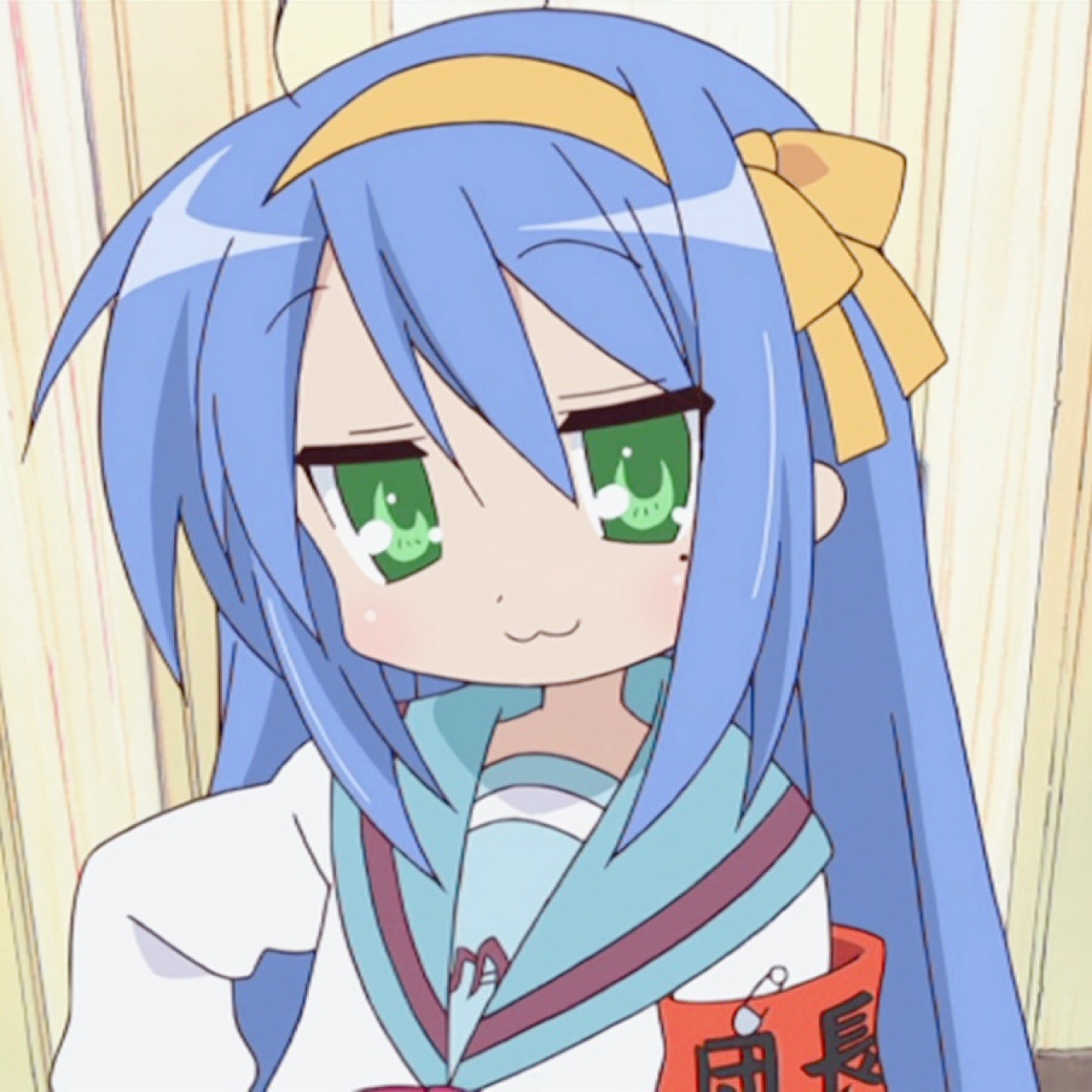
I wasn’t a fan of Lucky Star when I was younger because I was upset that so many people who watched it hadn’t watched Haruhi. Similarly, I disliked K-On! because the second season of Haruhi looked so much like it. I view both of them more fondly now, though.
I think that Haruhi and Kyon are almost real. Their relationship is very sweet—two autistic souls finding each other in this weird little world of ours. But then Haruhi dons a bunny girl outfit or acts outlandishly mean, then Kyon makes a lustful remark about Mikuru—and you’re reminded that this is just an anime. Mikuru, Yuki, and Itsuki are all so distant from each other, it’s sad. They never get better about it, either. I’ve read the novels, and they always keep each other at arm’s length—they never learn to trust each other, they never find true meaning or friendship. I remember finding issue with this when I was a fan, too, and I enjoyed stories that focused on the group’s friendship developing into college and beyond. I loved reading about Haruhi, Mikuru, and Yuki supporting each other, as well as Kyon and Itsuki being real friends. But they aren’t. That’s not what the show is about.
That’s what really struck me, watching Haruhi as a grown adult. I remember watching this show in middle school, being friendless and alone, and wanting so desperately to have a “brigade” to go on fun adventures with. And, eventually, I found one. I had a lovely friend group in high school that I’m lucky to still have today, and we’ve gone on so many amazing, fantastic adventures since then. We’ve been through so much together: drama, death, moving apart, finding love, abandoning God. They are everything I could ask for and more. I am so lucky to have them.
Haruhi doesn’t have a group like that. She doesn’t have any genuine friendships… and it makes me so, so sad for her. I wonder if Haruhi would look at my life and think to herself, “I wish I had a brigade like that that I could go on adventures on.” That’s what I think Haruhi actually wants, more so than aliens, time travelers, or espers. When she snuck into her school on July 7th, 2007 to write a message to people from beyond the stars, she spoke from her heart. “I AM HERE,” she said. Notice me. Find me. Love me. I will bend reality itself if it means that love can finally find me.
That’s the real melancholy of Haruhi Suzumiya. I was able to eventually find love and meaning—but Haruhi, permanently sixteen, never will. I was inspired by her commitment to being herself when I was younger, and without her, I wouldn’t have been able to grow into who I am today. I wish I could offer her that same boon, but I can’t. Such is the tragedy of fiction.
I’d like to think, though, that somewhere out there in the great wide multiverse of thought, Haruhi has grown up. In that future that Mikuru is from, I hope that Haruhi has found that love she’s been so desperately craving. Whether it manifests in meaning, acceptance, or creativity—I believe she can find it. I’ll bend reality itself for her to find it. I’ll save the world by overloading it with fun, just as Haruhi Suzumiya did for me. I owe it to her.
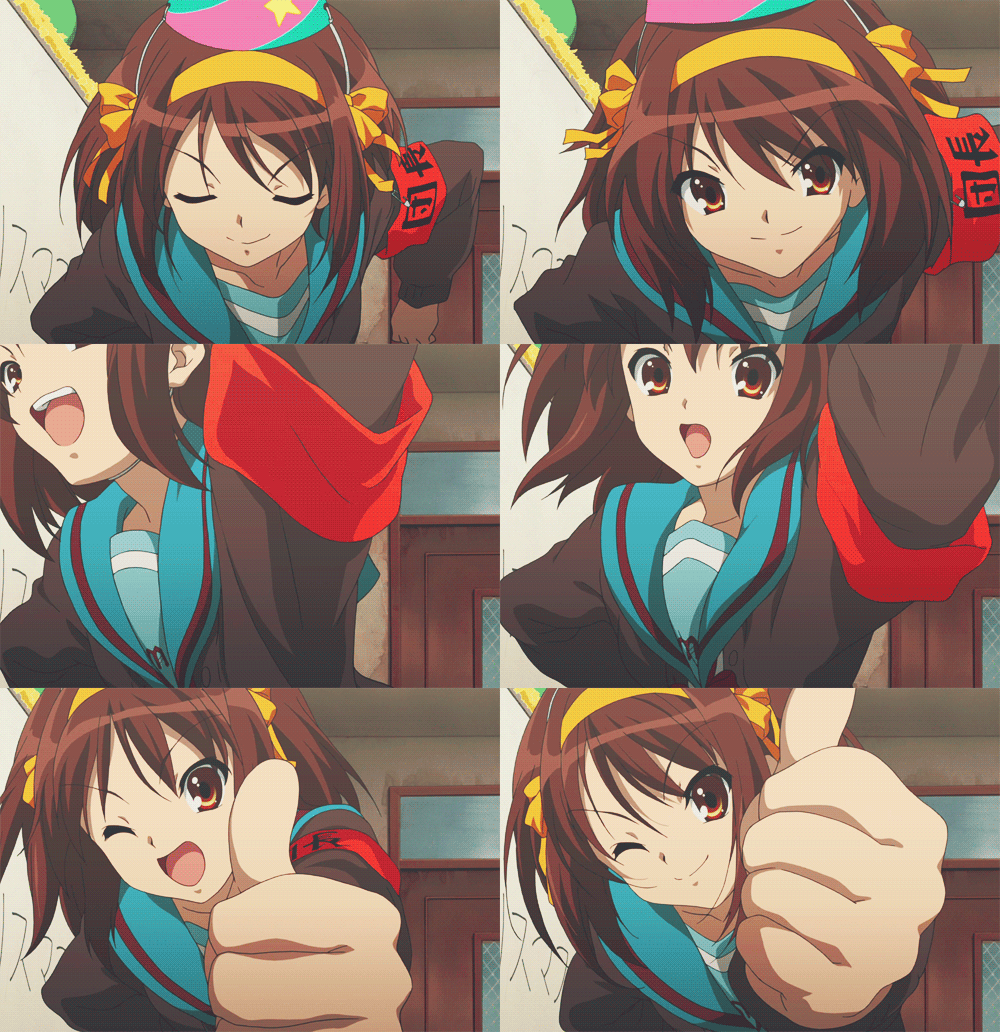
You can watch The Melancholy of Haruhi Suzumiya on Crunchyroll, though there’s something so cute about old fansubs. If you choose to check it out, I recommend watching it in broadcast order rather than chronological order. That’s the way it was produced, and it’s much better—that way you don’t end with Someday in the Rain, the worst episode. You don’t need to watch all of the Endless Eight—watch the first one, the second one, and then the last one… unless you’re really into 2009 anime fashion.